Answer as yourself, thinking about how you usually act. Exploring a fictional character? Keep that same character in mind from beginning to end. Choose how much you agree with each statement, or select “Not enough context to answer” when you need more information.
How it works
Answer: Choose how strongly you agree with each statement, with room to go back and change an answer.
Understand: Read your two axis scores, illustrated alignment, and notes explaining the pattern in your choices.
Share: Save a result card or copy a summary link for friends to open.
Use this moral alignment quiz to explore your usual choices, rather than the answers you think sound most admirable.
Read the two axes in your DND alignment test
Each alignment combines two separate directions. The order axis runs from Lawful through Neutral to Chaotic. The morality axis runs from Good through Neutral to Evil. Reading them separately helps you see why two people can share a concern for others yet disagree about rules, or follow the same rules for very different reasons.
Lawful choices lean toward commitments, shared rules, or a personal code. Chaotic choices lean toward autonomy and room to make your own call. Consider what happens when a promise becomes inconvenient, a tradition no longer fits, or a rule stands between you and a decision. Being organized alone does not settle this axis.
Good choices give weight to other people's welfare and to avoiding harm. Evil choices, in this quiz, accept harm to others in pursuit of personal goals. Ordinary self-care, needing rest, or declining an extra favor is different from exploiting someone who has no way out. Read the actual tradeoff in each statement before choosing an answer.
Neutral is the middle category on either axis. Look at the accompanying notes to see whether your position comes from middle answers or from choices pulling in different directions. The two-axis view gives your moral alignment quiz result more meaning than a label alone.
Explore all nine DND alignment test results
Explore the pictures and descriptions below, then take the test to see where your answers land. Each illustration shows one possible scene. A shield, a cloak, or a character's appearance does not determine an alignment; the choices behind the scene matter.
Lawful Good in the DND alignment test
These choices combine concern for others with a preference for commitments and shared rules. The illustrated guardian protects a traveler, showing how a commitment can support someone else. Read both axes to see how helping and keeping promises contributed to your result.
Neutral Good in the DND alignment test
These choices favor helping others while falling in the middle range on order. The illustrated healer offers practical help. Your order notes explain whether the middle position comes from neutral answers or a mix of rules-focused and freedom-focused choices.
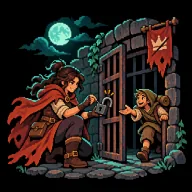
Chaotic Good in the DND alignment test
These choices combine concern for others with a preference for autonomy. The illustrated rescuer challenges a restriction to help someone trapped. Caring about the person and challenging the restriction belong to different axes; the result brings those choices together.
Lawful Neutral in the DND alignment test
These choices lean toward commitments and shared rules, with morality answers in the middle range. The illustrated adjudicator holds scales and a scroll. Read the morality notes to understand that middle position, rather than treating a preference for rules as a judgment about kindness.
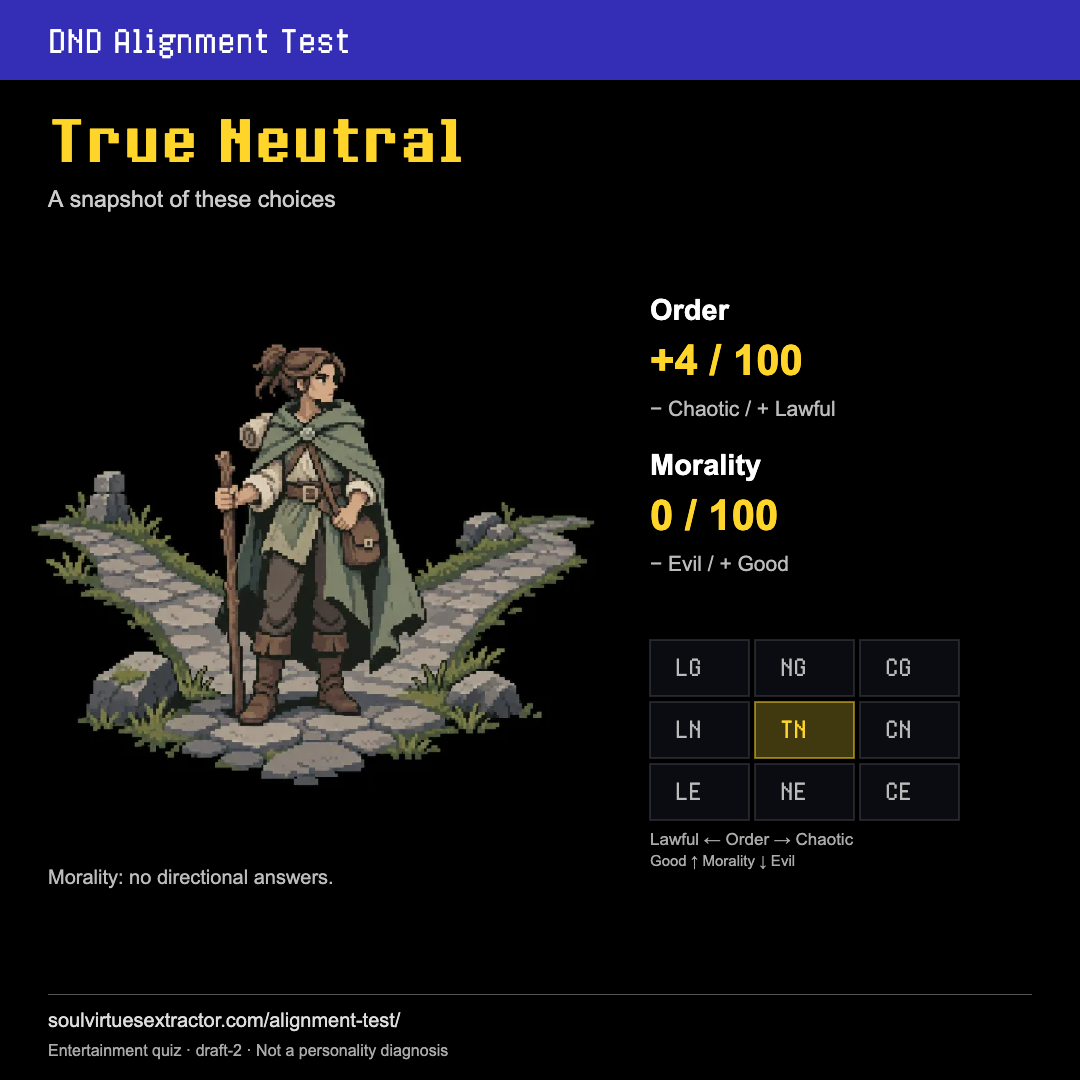
True Neutral in the DND alignment test
Both axes fall in the middle range. The illustrated traveler pauses at a crossroads. Your notes distinguish middle answers from choices pulling in opposite directions, and flag nearby category boundaries. Different answer patterns can reach the same square.
Chaotic Neutral in the DND alignment test
These choices lean toward autonomy, with morality answers in the middle range. The illustrated traveler heads toward an open road. Wanting room to choose your own way describes the order axis; the morality notes explain the other half of your result.
Lawful Evil in the DND alignment test
These choices combine a preference for rules with accepting harm to others for personal gain. The illustrated authority figure controls a ledger and a locked money chest. The combination matters: a rule can support a commitment while also securing an advantage at someone else's expense.
Neutral Evil in the DND alignment test
These choices accept harm to others for personal gain, without a strong overall lean on the order axis. The illustrated opportunist takes money intended for people in need. Review your answers to see which statements about others' welfare and your own advantage shaped this result.
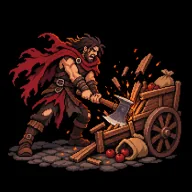
Chaotic Evil in the DND alignment test
These choices combine personal autonomy with accepting harm to others for personal gain. The illustration shows destructive action. Wanting freedom alone does not produce this combination: the morality answers also need to point toward accepting someone else's suffering.
DND alignment test scores: your moral alignment quiz explained
Read the two scores first, then the alignment and any result notes. Each score combines 12 equally weighted statements. Some statements point toward one end when you agree; others point toward the opposite end. Select the response that fits you, rather than trying to collect a particular label.
Your result shows each axis from −100 to +100. On order, the negative end is Chaotic and the positive end is Lawful. On morality, the negative end is Evil and the positive end is Good. These numbers locate your answers on this quiz's scale; they are not percentages of people you outrank or percentages of how good you are.
“Not enough context to answer” leaves that statement out of the calculation. At least eight counted answers on each axis are needed for an overall alignment. If one axis needs more information, review the relevant statements and add answers where you can. You can still see which axis has enough information to interpret.
The middle category lies between −33⅓ and +33⅓; an exact boundary belongs to the outer category. Near a boundary, a small answer change may move the label. “Mixed choices” appears when at least three counted answers point toward each end of an axis. Use these notes to understand the pattern instead of reading the square as a permanent verdict about yourself.
The boundary-note rule: A note appears when a score is within 100 divided by the number of counted answers of either cutoff, including the cutoff itself. With all 12 answers counted, that distance is about 8.33 points. Classification uses the unrounded score, even when the displayed number is rounded.
Share your DND alignment test result
Save an illustrated result card or copy a summary link after completing your result. The card brings together your alignment, both axis positions, and relevant notes about middle answers, mixed choices, or category boundaries. The summary link lets someone else open that result and start their own test.
When comparing results, ask about a choice that surprised you. Two people in the same square may arrive there through different answers, while two neighboring results may be separated by a small shift. You can use your moral alignment quiz result as the beginning of a conversation about choices, rather than a competition to reach the “best” square.
DND alignment test questions, answered
What is included in the free DND alignment test?
All 24 questions, the complete core result, both axis positions, the explanation, and the image and summary-link sharing options are free. You can explore all nine illustrated alignments before starting. Take the test and view your result without creating an account or entering an email address.
How should I answer the DND alignment test for a character?
Think about what the same fictional character would usually choose throughout the test. Use their commitments, motives, and treatment of others as your reference. When comparing with friends, say whether you answered as yourself or as a character, so everyone understands what the result describes.
What does True Neutral mean in the DND alignment test?
Both axes landed in their middle categories. Read the notes to distinguish middle answers from a mix of choices in opposite directions. If every counted answer used the middle option, the explanation says your answers did not lean toward either end. You can review specific statements if that does not capture what you meant.
How do I change an answer in the DND alignment test?
Use Back while answering, or open the answer review from your completed result. Change the statement you want to revisit, then update the result. To take the whole test again, choose Retake the test and confirm. Cards and links you already saved keep the earlier summary. To share the updated result, save a new image or copy a new summary link.
How can I use my DND alignment test result?
Use it for entertainment, reflection, or exploring a fictional character's choices. Read the two axes and the answer review together, especially when a label surprises you. Treat this moral alignment quiz as a prompt for discussion; your actions and their context tell a fuller story than a single result.
What does a shared DND alignment test link show?
It opens the shared alignment, both axis values, and the relevant result notes. Your individual answers are left out of the summary. Anyone who receives or is forwarded the link can view that summary, so share only a result you are comfortable passing on. A friend can read the result and take the test themselves. If you want to discuss a particular answer, choose what to tell them separately.
What if I need more context in the DND alignment test?
Choose “Not enough context to answer” for that statement. It will be left out of scoring. You need at least eight counted answers on each axis for a complete alignment. If an axis has too few, review the marked statements and add answers where you can; the other axis can still show what it has enough information to explain.
Why can a DND alignment test result change near a boundary?
A small change to an answer can move a score across the cutoff between categories. Read both scores and the result notes to see how close you are. When comparing results with friends, consider the positions as well as the labels: neighboring squares can reflect very similar answers.